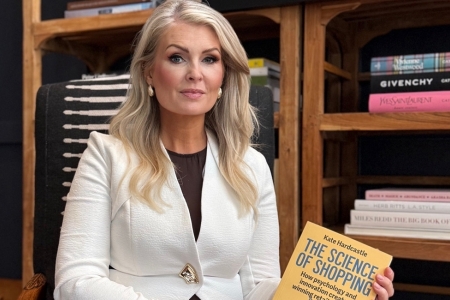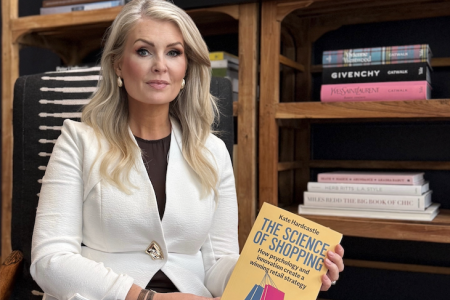
In the second of an exclusive series of columns taken from her new book, The Science of Shopping, retail expert Kate Hardcastle explains how, from high-street store to online marketplace, retail has evolved – and that while the fundamentals remain as relevant as ever, businesses must continually reassess their relationship with the consumer …
Retail is much more than a mechanism for transactions – it is a mirror of our lives, shaped by the societal shifts that influence how we live, think and connect. From the bustling markets of ancient times to the rise of department stores, and now the dominance of online shopping giants, the journey of retail has been one of continuous adaptation. At its core, retail is about people – their needs, their desires and their stories.
But shopping is not merely functional – it is deeply personal. It’s a way to express individuality, to connect with trends and even to define identity.
Whether buying out of necessity or indulgence, the act of shopping reveals the interplay between practicality and aspiration. While macro changes like technological advancements and globalisation have transformed the industry, the heart of retail remains unchanged – the ability to create meaningful connections with consumers.
A new framework for understanding consumer behaviour
In navigating this complex relationship, one of the frameworks I’ve developed over the years, the Buyerarchy of Needs, emerges as a critical tool. Inspired by Maslow’s hierarchy but adapted for the retail world, it recognises that consumer behaviour is fluid, not fixed. While Maslow’s pyramid suggests a progression from basic to higher-order needs, the Buyerarchy reflects the realities of modern retail – consumers frequently move between levels, driven by emotions, peer influence or changing circumstances.
Take, for instance, the meteoric rise of fast fashion. On the surface, it addresses a practical need – affordable clothing. Yet brands like Zara and H&M have mastered the art of triggering emotional responses. They play on the desire for novelty, the influence of social media and the fear of missing out, encouraging consumers to prioritise wants over needs. This dynamic interplay between necessity and desire lies at the heart of retail’s evolution.
Similarly, ethical considerations have begun to factor into consumer choices. Shoppers are increasingly balancing their aspirations for affordability and trendiness with the desire to support sustainable and socially responsible brands. These shifting priorities illustrate the layered complexity of modern consumer behaviour, where financial means, emotional desires and social values constantly interact.
The enduring heart of retail
As we continue to explore the future of retail, it’s important to remember that retail is not static – it evolves with society, technology and consumer expectations. Yet its essence remains rooted in human connection. Brands that thrive in this ever-changing landscape are those that understand their customers not just as buyers, but as people with emotions, aspirations and stories.
The evolution of retail reflects how far we’ve come – and where we’re going. By focusing on personalisation, building emotional resonance and tapping into the fluid nature of the Buyerarchy of Needs, retailers can position themselves to meet the demands of today’s consumers while paving the way for tomorrow. The journey is not just about selling products – it’s about shaping experiences that matter.
Excerpt from The Science of Shopping, courtesy Kogan Page. To buy a discounted copy, click here and enter code KOGANPAGE25 at checkout.